
What is AI in Energy?
Artificial intelligence in energy systems refers to the use of machine learning and advanced data analytics to optimize the generation, storage, distribution, and consumption of energy. By analyzing large volumes of real-time data, AI enables faster, more accurate decision-making across increasingly complex energy systems.
AI is rapidly transforming how power is generated, stored, and distributed across modern infrastructure. What was once an experimental capability is now a core competitive advantage for utilities, grid operators, and energy companies worldwide.
These include six energy sectors: solar, wind, battery energy storage systems (BESS), virtual power plants, EV charging infrastructure, and smart grids. Each sector applies AI through forecasting, optimization, automation, or real-time control.
In fact, AI in energy is already being deployed at scale. According to recent industry data, over 41% of North American utilities have integrated artificial intelligence into their operations, surpassing expectations years ahead of schedule. As a result, the conversation has shifted — it is no longer about whether AI is ready, but how far ahead early adopters of AI in energy systems have moved, and how quickly others can close the gap.
This article explores real-world AI applications across six energy sectors. Each example demonstrates measurable results, improved efficiency, and a widening gap between industry leaders and those catching up.
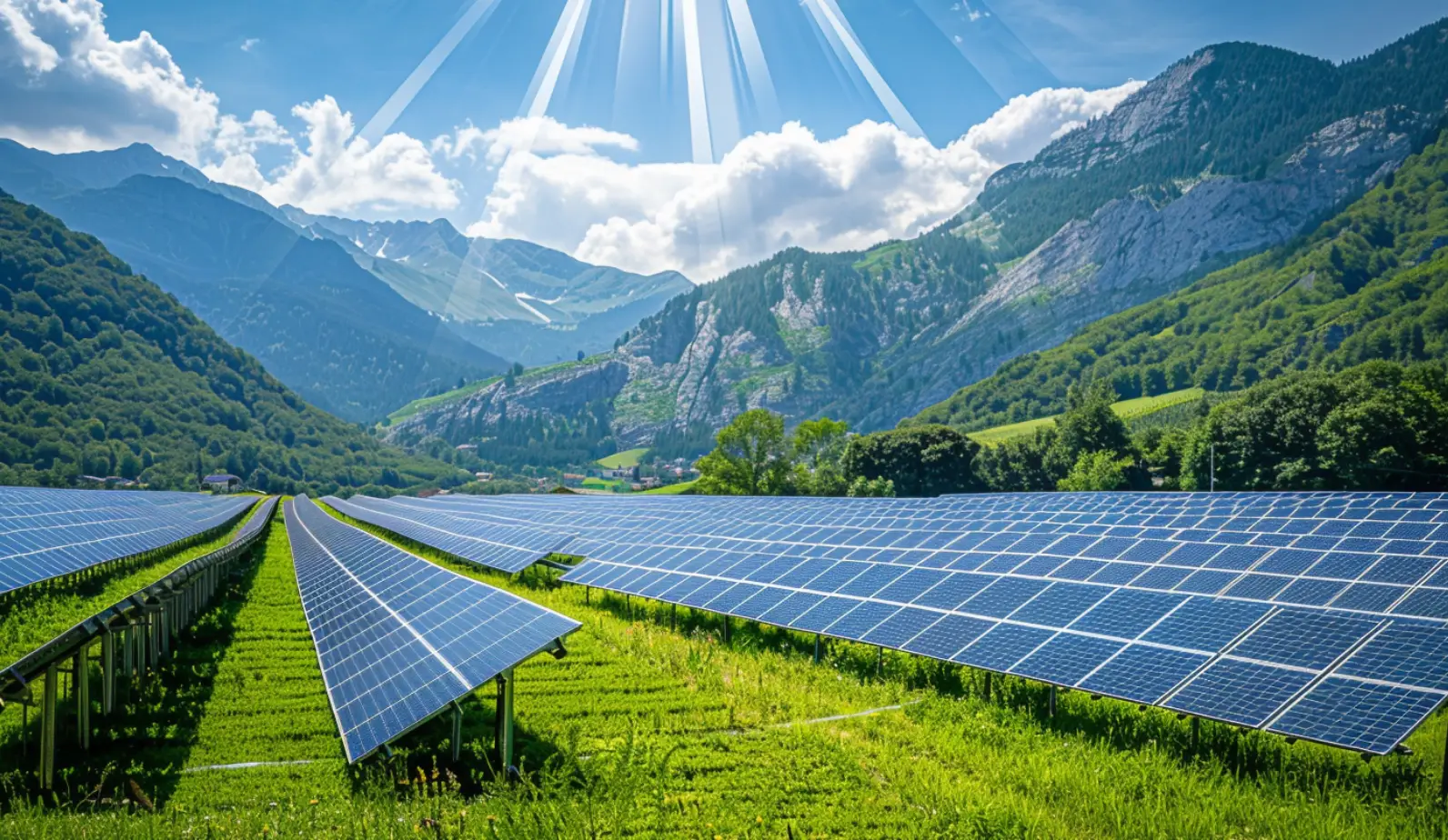
AI in Solar Energy
In solar energy, artificial intelligence improves forecasting accuracy, optimizes plant performance, and reduces costs through automation and predictive analytics.
The Challenge in Solar Energy
Solar energy generation is inherently variable. Cloud cover, temperature shifts, and seasonal patterns create forecasting errors that translate directly into grid balancing penalties and wasted reserve capacity. As a result, utilities face significant financial exposure when forecasts are inaccurate.
The AI Solution in Solar Energy
AI-powered platforms such as Vaisala’s Xweather deliver site-specific solar energy forecasts up to 230 hours ahead, updated every five minutes. Specifically, these systems achieve a mean absolute error of ±5% for hour-ahead forecasts [2] and produce results that are up to 30% more accurate than those of traditional models such as ECMWF [2].
In the UK, Open Climate Fix deployed its Quartz Solar AI within the National Energy System Operator (NESO) control room in 2025. Consequently, the system reduced solar forecasting errors by 50%, saving an estimated £30 million ($39 million) annually in grid balancing costs [3].
Key Insight
A 25%+ improvement in planning accuracy can save tens of thousands of dollars per week for a single utility. Furthermore, across a global solar fleet exceeding 1,800 GW, AI-driven forecasting represents a multi-billion-dollar value opportunity.
How is AI used in solar energy?
AI is used in solar energy to forecast power generation, optimize panel performance, detect faults, and improve grid integration.
AI in Wind Energy
In wind energy systems, artificial intelligence is now widely used to enhance forecasting, enable predictive maintenance, and optimize turbine operations, reducing operational costs at scale.
The Challenge in Wind Energy
Unplanned wind turbine outages are extremely costly, with downtime reaching approximately $25,000 per turbine per day. Moreover, large wind farms often span remote locations, making reactive maintenance both logistically complex and financially inefficient.
The AI Solution in Wind Energy
AI-powered platforms such as Vestas Scipher® analytics system process real-time data from over 120 GW of installed turbines — representing one of the largest wind energy datasets globally [4].
Using advanced machine learning and digital twin technology, these systems continuously monitor turbine performance, detect anomalies, and predict component failures weeks in advance.
As a result, operators using AI-driven predictive maintenance achieve up to 11% reductions in operations and maintenance costs, 60% fewer field inspections, and 85% shorter repair lead times [5].
In addition, Vestas’ PowerPlus™ upgrades, deployed across more than 10,000 turbines, increase annual energy production by up to 5% [4,6].
Key Insight
With access to over 120 GW of operational data, Vestas has developed one of the most advanced AI training datasets in the wind energy sector. Consequently, each turbine contributes to a continuously improving system, where every data point enhances the performance of the entire fleet. This creates a powerful compounding advantage that is difficult for competitors to replicate.
How is AI used in wind energy?
AI is used in wind energy to forecast wind patterns, optimize turbine performance, predict equipment failures, and improve overall wind farm efficiency through real-time data analysis.
AI in Battery Energy Storage Systems (BESS)
In battery energy storage systems (BESS), artificial intelligence is increasingly applied to optimize forecasting, orchestrate charge and discharge cycles, and maximize revenue in dynamic energy markets.
AI is not just managing batteries — it is monetizing them.
The Challenge in BESS
Grid-scale battery storage is only as profitable as the decisions governing when it charges, discharges, and participates in energy markets. However, manual or rule-based dispatch strategies often fail to capture real-time price signals, leaving significant revenue opportunities untapped in fast-moving energy environments.
The AI Solution in BESS
AI-powered platforms such as Fluence Mosaic optimize battery operations by co-optimizing energy and ancillary service bids in real time. This platform is widely deployed in Australia’s National Electricity Market, including projects such as Gentari’s 172 MW/409 MWh Maryvale solar-plus-storage system [7,8] and AMPYR’s 300 MW/600 MWh Wellington BESS under long-term contracts [9].
In addition, Tesla has scaled AI-driven energy storage globally, deploying 46.7 GWh in 2025 and generating $12.8 billion in revenue — a 27% year-over-year increase [10]. As a result, every kilowatt-hour of stored energy is now a tradeable, optimized financial asset.
Key Insight
AI is fundamentally changing how battery storage projects are designed, financed, and operated. Consequently, systems equipped with AI-enabled dispatch achieve significantly higher returns compared to traditional approaches. The projects being developed today reflect a new paradigm — where intelligent optimization is no longer optional but essential for competitiveness.
How is AI used in BESS?
AI is used in battery energy storage systems to optimize charge and discharge cycles, forecast energy demand, maximize market participation, and improve overall system profitability.
AI in Virtual Power Plants (VPP)
In virtual power plant (VPP) systems, artificial intelligence is now widely applied to aggregate distributed energy resources, coordinate their use, and enable real-time optimization for grid operations.
The Challenge in Virtual Power Plants
Millions of distributed energy resources — including home batteries, electric vehicles, and smart thermostats — operate behind the meter and remain largely invisible to grid operators. As a result, without aggregation and intelligent dispatch, these assets cannot be fully utilized, leaving them economically inefficient.
The AI Solution in Virtual Power Plants
AI-powered VPP platforms aggregate and orchestrate distributed assets into unified, grid-scale resources. For example, NRG Energy partnered with Renew Home to develop a 1 GW AI-driven virtual power plant in Texas, leveraging smart thermostats for grid-responsive cooling [11].
At the same time, North American VPP capacity reached 37.5 GW in 2025, with deployments, offtake agreements, and monetized programs growing more than 33% year-over-year [12]. Additionally, Base Power deployed over 100 MWh of residential battery capacity across Texas in under two years, qualified for ERCOT’s ADER program, and raised $1 billion in Series C funding at a $3 billion valuation [13].
Consequently, virtual power plants have evolved from experimental pilots into fully operational, grid-scale infrastructure built from devices already installed in homes and businesses.
Key Insight
The next generation of power plants will not be constructed in a single location. Instead, they will be assembled from millions of distributed devices, dynamically coordinated through AI. This creates a new paradigm in energy systems — where intelligence, not infrastructure, determines system performance.
How are AI-powered VPPs used?
AI-powered virtual power plants aggregate distributed energy resources, optimize real-time energy dispatch, balance supply and demand, and provide grid services such as demand response and peak load management.
AI in EV Charging Infrastructure
In EV charging infrastructure, artificial intelligence enables intelligent load balancing, optimizes operational costs, and transforms charging networks into flexible grid assets.
The Challenge in EV Charging Infrastructure
Unmanaged EV charging can cause significant peak demand spikes, straining local distribution grids and increasing operational costs for utilities and fleet operators. As EV adoption accelerates, these challenges become more complex and harder to manage using traditional systems.
The AI Solution in EV Charging Infrastructure
AI-powered platforms such as ChargePoint are deployed at scale to manage large charging networks. For example, ChargePoint’s AI system is used by Verizon across more than 1.25 million charging ports globally, enabling real-time load balancing and optimizing energy usage during peak demand periods [14].
In Canada, BluWave-ai successfully completed the country’s first AI-driven EV demand response events in collaboration with Hydro Ottawa and IESO. As a result, distributed EV charging infrastructure demonstrated its ability to function as a reliable, dispatchable grid resource [15].
Key Insight
AI Is Turning EV Charging into a Grid Asset. When managing millions of charging points, decisions must be made in milliseconds. Consequently, AI enables precise, real-time control, transforming EV charging from a grid constraint into a flexible and valuable energy asset.
How is AI used in EV charging infrastructure?
AI is used in EV charging infrastructure to balance grid load, optimize charging schedules, reduce energy costs, and enable demand response by coordinating large networks of charging stations in real time.
AI in Smart Grids
Artificial intelligence is transforming smart grids by enabling real-time decision-making, improving grid reliability, and optimizing the integration of distributed energy resources at scale.
The Challenge in Smart Grids
Modern power grids must manage bidirectional energy flows, variable renewable generation, millions of distributed energy resources, and aging infrastructure — all in real time. However, traditional SCADA systems are not designed to handle this level of complexity, leading to inefficiencies, delays, and an increased risk of outages.
The AI Solution in Smart Grids
AI-powered platforms, such as Schneider Electric’s One Digital Grid Platform, enable utilities to analyze vast amounts of real-time data and automate grid operations. Launched in 2025, this platform has demonstrated significant impact, including reducing outage durations by up to 40%, shortening DER interconnection timelines by 25%, and accelerating deployment timelines by 60% [16].
At the same time, industry adoption continues to accelerate. Approximately 41% of North American utilities have already integrated AI into their operations, exceeding earlier projections. In addition, utilities using AI-driven predictive maintenance report up to 60% fewer emergency repairs [1].
Key Insight
AI is becoming the operating system of the grid. AI is no longer just enhancing grid operations; it is redefining them. By embedding intelligence directly into grid infrastructure, utilities can move from reactive management to proactive, autonomous systems. Improvements such as a 40% reduction in outage duration represent not just incremental gains, but a fundamental redesign of energy system operations.
How is AI used in smart grids?
AI is used in smart grids to optimize energy distribution, predict demand, integrate renewable energy sources, detect faults, and enable real-time automation of grid operations.
What This Means for Energy Professionals
Across every sector covered in this article, the pattern is clear: what was considered experimental just 24 months ago is now production infrastructure delivering measurable ROI.
As a result, a gap is rapidly emerging between organizations that have adopted AI in energy systems and those that have not. This gap is no longer theoretical — it is visible in faster project execution, more accurate forecasting, and higher-quality real-time decision-making.
The Competitive Gap Is Accelerating
Operators using AI are not just improving performance; they are compounding their advantage. They are making better decisions faster, reducing costs, and unlocking new revenue streams — while others are still evaluating where to start.
This advantage is also shaping careers. Increasingly, the professionals who understand and apply AI are the ones leading projects, influencing strategy, and being called first when new deployments are planned.
The Real Question
If you work in energy — whether in solar, wind, storage, EV infrastructure, or grid operations — the real question is no longer whether AI matters.
It is this: Are you building fluency with these tools while the window is still open, or are you planning to catch up later?
Conclusion
Across every energy sector, the pattern is clear: AI is removing the limits of human-speed decision-making. Whether forecasting solar output, predicting turbine failures, optimizing battery dispatch, or coordinating millions of distributed assets, intelligence is now embedded directly into the system.
As a result, energy is no longer simply managed — it is orchestrated in real time. The organizations adopting AI today are not just improving efficiency; they are redefining how energy systems operate at scale.
Every sector now has AI deployments with proven, measurable ROI at production scale.
The question for energy professionals is no longer “should we invest in AI?” It’s “how far behind are we?” — and more personally, “what am I doing this week to close that gap?”
The energy transition needs professionals who understand both the physics and the intelligence layer. That is what we are building here, one week at a time.
— Veronika Shabunko, PhD | Founder, AIN Energy X | ainenergyx.com
Get weekly AI in Energy analysis — no hype, no noise:
→ Subscribe to the AI IN Energy X newsletter: https://ainenergyx.kit.com/join
FAQ: AI in Energy
What is AI in energy?
AI in energy refers to the use of artificial intelligence to optimize energy generation, storage, distribution, and consumption through data-driven automation and predictive analytics.
What are the main applications of AI in energy?
AI in energy is used across multiple sectors, including solar forecasting, wind turbine optimization, battery energy storage management, smart grids, EV charging infrastructure, and virtual power plants. These applications improve efficiency, reduce costs, and enable real-time decision-making.
Which companies use AI in energy?
AI is widely used by utilities, grid operators, and technology companies to optimize energy systems. Leading organizations deploy AI to enhance forecasting, automate grid operations, and improve overall system performance.
What are the benefits of AI in energy?
The main benefits of AI in energy include improved operational efficiency, reduced costs, predictive maintenance, enhanced grid reliability, and better integration of renewable energy sources.
Which energy sector has the highest AI adoption?
Grid operations and solar forecasting currently show the highest levels of AI adoption. According to industry data, over 40% of North American utilities have integrated AI, particularly in demand forecasting, predictive maintenance, and outage management.
Is AI replacing energy engineers and grid operators?
AI is not replacing energy professionals; it is augmenting their capabilities. While AI automates repetitive tasks, it increases the demand for professionals who can combine domain expertise with AI-driven decision-making.
What is a virtual power plant, and how does AI enable it?
A virtual power plant (VPP) aggregates distributed energy resources such as home batteries, electric vehicles, and smart devices into a single, dispatchable system. AI enables this by forecasting demand, coordinating thousands of devices, and optimizing energy distribution in real time.
How does AI improve battery energy storage revenue?
AI improves battery storage profitability by optimizing charge and discharge cycles, participating in energy markets, and balancing supply and demand in real time. This allows operators to maximize revenue across multiple value streams.
What is the biggest barrier to AI adoption in energy?
The primary barrier to AI adoption in energy is the talent gap. Organizations require professionals who understand both energy systems and AI technologies to successfully implement and scale these solutions.
References
[1] Itron, 2025 Resourcefulness Report. itron.com/na/resources/resourcefulness-report
[2] Vaisala Xweather, Energy Forecasting for Wind and Solar Farms. vaisala.com/en/products/renewable-energy/forecaster
[3] PV Magazine, ‘AI-Powered Solar Forecasting Helps UK Grid Operator,’ November 2025. pv-magazine.com/2025/11/07/
[4] Vestas, Scipher® Energy Analytics Platform. vestas.com/en/energy-solutions/service/digital-services/scipher
[5] vHive, ‘Understanding Digital Twin Technology in Wind Energy,’ November 2024. vhive.ai/understanding-digital-twin-technology-in-wind-energy/
[6] Vestas, Fleet Optimisation — PowerPlus™. vestas.com/en/energy-solutions/service/fleet-optimisation
[7] Energy-Storage.News, ‘Fluence Mosaic for 172 MW Solar+BESS,’ March 2025. energy-storage.news/gentari-picks-fluences-optimisation-platform/
[8] PV Magazine Australia, ‘Gentari and PCL Construction,’ August 2025. pv-magazine-australia.com/2025/08/15/
[9] GlobeNewswire, ‘Fluence Chosen for 300 MW Wellington BESS,’ July 2025. globenewswire.com/news-release/2025/07/08/3111421/
[10] OpenTools.ai, Tesla Energy Storage Division Performance Data, 2025. opentools.ai
[11] Mordor Intelligence, ‘NRG Energy and Renew Home 1 GW VPP,’ 2025. mordorintelligence.com
[12] Utility Dive, ‘North American VPP Capacity Reaches 37.5 GW,’ 2025. utilitydive.com
[13] BusinessWire, ‘Base Power Raises $1 Billion Series C,’ October 2025. businesswire.com/news/home/20251008106005/
[14] BusinessWire, ‘ChargePoint AI Platform Deployed by Verizon,’ 2025. businesswire.com
[15] BluWave-ai, ‘Energy Storage Canada Grid Management Award 2025,’ October 2025. bluwave-ai.com/blog/bluwave-ai-press-release-energy-storage-canada-grid-management-storage-award-2025
[16] SkyQuestt, ‘Schneider Electric One Digital Grid Platform,’ March 2025. skyquestt.com