
The AI in Energy Intelligence Hub
AI in Energy: Applications, Startups, Innovations & Key Players

Latest Insights
Browse in AI · Energy



2026 Market Intelligence
✦ AI IN ENEGY OUTLOOK
The global AI in energy market is on a hyper-growth trajectory, projected to reach $ 75.5B by 2034 as hyperscale AI demand reshapes global grid physics.
- The global AI in energy market was valued at $18.1B in 2025 and is projected to reach $75.5 billion by 2034, growing at a CAGR of 17.2%.
- Renewable energy management holds the largest application share at 28.8% of the AI in energy market in 2024
- Global data centre electricity consumption is projected to double to approximately 945 TWh by 2030 — growing at 15% per year, more than four times faster than all other sectors combined.
- Traditional data centres use 10–25 MW of power; hyperscale AI centres now exceed 100 MW — equivalent to the annual electricity consumption of 100,000 households.
- In 2026, AI in Energy has evolved has evolved into a central orchestration layer for Virtual Power Plants (VPPs) and Distributed Energy Resource Management Systems (DERMS) .
- By autonomously balancing renewable intermittency from Solar and Wind with Flexible Demand from Smart Buildings and BESS assets, AI ensures grid stability and accelerates the transition to a decarbonized energy system.
Source: IEA Energy & AI Report 2025 | Precedence Research | Grand View Research
⚡ BATTERY STORAGE
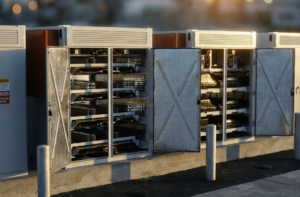
AI in Battery Energy Storage (BESS)
AI-integrated predictive diagnostics deliver battery lifetimes up to 25% longer through real-time cell-level monitoring of temperature, voltage, and thermal-runaway risk — across 120 published case studies.
Algorithmic dispatch protocols enable AI-optimised revenue stacking, allowing BESS operators to offset 15–25% of total system CAPEX through grid services revenue.
AI-powered early warning systems for lithium-ion battery thermal runaway now provide advance detection of up to 5 hours before failure — enabling intervention before cascade events occur.
🤖 AI Impact — AI-driven algorithms optimize charge/discharge cycles in real time, forecast market prices, and automate BESS dispatch to maximize revenue through automated arbitrage and VPP participation and grid services.
Sources: Straits Research 2025 | ScienceDirect Energy AI Review 2025 | BloombergNEF Energy Storage Outlook 2025
Read more →
☀️ SOLAR ENERGY
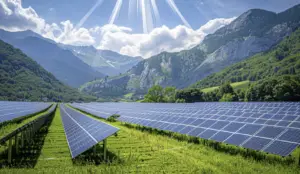
AI in Solar Energy
Computer vision and geospatial AI have accelerated pre-construction site analysis from weeks to hours — replacing manual irradiance modelling, grid connection assessment, and land-use review.
Deep reinforcement learning applied to solar-plus-storage dispatch reduced curtailment by 76% in optimisation trials — with AI in storage systems cutting operational costs by 12.2% and voltage fluctuations by up to 71%.
AI-supported O&M scheduling utilising real-time soiling and performance data delivers availability gains of up to 10% and capacity factor improvements of 2–3% — directly determining whether a project meets its financial model.
🤖 AI Impact — AI accelerates site selection from weeks to hours, optimises O&M scheduling using real-time soiling and weather data, and improves generation forecasting to reduce curtailment and maximise asset revenue.
Sources: UniVDatos 2025 | Wood Mackenzie / SEIA Solar Market Insight Q2 2025 | IEA Photovoltaic Power Systems Programme
Read more →
🌬️ WIND ENERGY
AI in Wind Energy
AI-optimised wake steering coordinates real-time turbine orientation to increase total farm energy yield by up to 20% — with Google's AI-enhanced wind forecasting boosting asset ROI by improving commitment accuracy and reducing curtailment.
AI-powered predictive maintenance agents now operate as continuous detection-to-dispatch feedback loops — with unplanned wind turbine outages costing $25,000 per turbine per day, making early AI intervention a direct financial imperative.
In April 2025 Siemens Energy launched an AI-driven platform to optimise wind turbine performance and reduce maintenance costs.
🤖 AI Impact — AI-driven predictive maintenance reduces wind turbine downtime by forecasting failures before they occur, while real-time optimization refines wake steering to increase farm-wide yield by 3-5% to maximize output per site.
Source: ScienceDirect 2025 | Precedence Research Wind Energy Market 2025 | Wood Mackenzie Wind Analysis 2025
Read more →
⚡ Smart buildings
AI in Smart Buildings
Commercial buildings with AI-integrated energy management systems achieve energy savings of up to 37% — surpassing conventional retrofits — with KPMG research published in September 2025 confirming AI models significantly outperform traditional building energy management.
In January 2025 Trane Technologies acquired BrainBox AI — a pioneer in autonomous generative AI HVAC systems — as the global AI in smart buildings market grows from $41.4 billion in 2024 to $359 billion by 2034 at a 24.1% CAGR.
AI enables buildings to participate in demand response programmes by adjusting HVAC, lighting, and other systems in real time using sensor data and weather forecasts — reducing peak grid strain while cutting operational costs and extending equipment lifespan.
🤖 AI Impact — AI optimises HVAC, lighting, and building systems in real time using occupancy and weather data, reduces commercial energy intensity, and enables buildings to participate actively in demand response programmes.
Sources: IEA Energy and AI Report 2025 | KPMG 2025 | Precedence Research Smart Buildings 2025
Read more →
🏡 MICROGRIDS
AI in Microgrids
TThe global microgrid market is estimated at $20.5 billion in 2025 and projected to reach $47 billion by 2030 at a CAGR of 17.85% — with AI-driven controllers enabling real-time optimisation of generation, storage, and load priorities as the primary technology differentiator.
AI enables frequency regulation and demand response optimisation in under one second, a capability impossible with conventional rule-based controllers.
AI-integrated microgrid energy management platforms now process thousands of data points per second — including real-time weather, electricity price signals, occupancy data, and battery degradation models — to optimise dispatch across all distributed energy assets simultaneously.
⚡ System Impact — Microgrid controllers optimize generation dispatch, storage usage, and grid interaction in real time, improving reliability, reducing costs, and lowering emissions.
Source: Mordor Intelligence 2025 | Virtue Market Research 2025 | MarketIntelo 2025
Read more →
🚗 EV & ELECTRIFICATION
AI in EV Charging & Electrification
The V2G market reaches $5.75 billion in 2025 and grows at 27.66% CAGR to $19.5 billion by 2030 — as AI-managed bidirectional platforms transform electric fleets into responsive Virtual Power Plants dispatching energy in milliseconds.
AI-enabled V2G technology reduces peak electricity demand by 10–15% through intelligent load shifting — with EV owners generating up to $1,000 annually by supplying grid services during peak demand periods.
In April 2025 China launched AI-managed V2G pilot projects across nine major cities — integrating EV fleets to store excess solar and wind generation and discharge it during peak hours, reducing fossil fuel dependence at scale.
🤖 AI Impact — AI manages bidirectional energy flow across EV fleets in real time, optimises charge/discharge schedules to shift load away from peak periods, and generates secondary revenue through grid-service participation.
Sources: IEA Global EV Outlook 2025 | Mordor Intelligence V2G Market Report 2025 | Precedence Research V2G 2025
Read more →
🌐 VPP
AI in Virtual Power Plants (VPP)
The global VPP market reaches $3.94 billion in 2025 growing at 27.63% CAGR to $13.56 billion by 2030 — with AI-driven orchestration now classified by grid operators as essential infrastructure, not optional, as VPPs defer spinning reserve investment while meeting reliability standards.
In June 2025 PJM was supported by 5 GW of power and load shifting from AI-managed VPPs during a Northeast heat wave — with Sunrun alone dispatching over 340 MW across five states on a single evening, demonstrating real-time AI dispatch at grid scale.
IoT-enabled VPPs augmented by AI energy management systems improved renewable energy generation by an average of 19% and reduced grid dependency by an average of 33% — with the US DOE projecting tripling VPP capacity to 80–160 GW by 2030 could save $10 billion annually in avoided grid costs.
🤖 AI Impact — AI predictive analytics forecast price signals, demand peaks, and renewable output to automatically dispatch VPP assets at optimal moments, maximizing revenue for aggregators and grid value for operators.
Sources: Mordor Intelligence 2025 | SEIA 2025 | ScienceDirect 2025 | US Department of Energy
Read more →
How AI Is Transforming Energy Systems
Artificial intelligence is no longer a future capability in energy — it is the operational backbone of the sector's most competitive players. The global AI in Energy market was valued at approximately $18 billion in 2025 and is forecast to reach $75 billion by 2034 at a 17%+ CAGR (Precedence Research). AI investment in energy attracted over 1,400 funding rounds with an average deal value of $61.5 million in 2025, with more than 1,800 investors participating (StartUs Insights).
📈
Forecasting
ML models deliver highly accurate predictions of solar and wind generation, electricity demand, and market prices — enabling smarter dispatch decisions across the grid at every timescale from minutes to years. Forecasting-as-a-Service is now the dominant segment in the AI energy forecasting market.
⚙️
Optimization
AI continuously optimizes energy flows across complex, multi-asset systems — minimizing costs, maximizing revenue, and balancing supply and demand in real time. This includes BESS dispatch, VPP coordination, microgrid management, and transmission routing.
🤖
Automation
Agentic AI systems are moving from supervised tools to autonomous operators — executing multi-step grid decisions with limited human oversight. The global agentic AI in energy market is forecast to grow at a 36.7% CAGR from 2026 to 2035 (Precedence Research, 2026).
🔧
Predictive Maintenance
AI-powered asset monitoring can reduce equipment downtime and cut maintenance costs by 25–30% by predicting failures before they occur. AI in Energy Distribution fault-prediction capabilities now serve utilities managing complex multi-asset distribution grids.
📊
Trading & Market Intelligence
AI algorithms analyze real-time price signals, weather data, and grid conditions to automate energy trading decisions — capturing arbitrage opportunities across wholesale markets faster than any human trader. AI-driven energy trading platforms are now managing billions in annual transaction volume.
🔌
Grid Digitalization
Digital twins, AI-powered SCADA systems, and smart sensors are transforming grid visibility and control. Utilities are deploying AI to monitor transmission and distribution assets in real time — reducing outage duration, improving power quality, and enabling faster fault isolation across aging infrastructure.

Dr. Veronika Shabunko
⚡ AI in Energy
Clean energy enthusiast covering AI in energy, battery storage (BESS), solar, wind, and smart grid innovation. Tracking AI tools, startups, and market trends weekly. Helping energy professionals stay ahead of AI.
FREE · WEEKLY
AI in Energy Newsletters
Get insights on AI tools, startups, and innovations transforming the energy sector — in just 5 minutes a week.
No spam. Unsubscribe any time.
LEARN 5 AI SKILLS THAT MAKE YOU FASTER – AND SAVE 10+ HOURS A WEEK
✦ Automate repetitive work
✦ Think faster with AI
✦ Delegate tasks effectively
No spam. Unsubscribe any time.